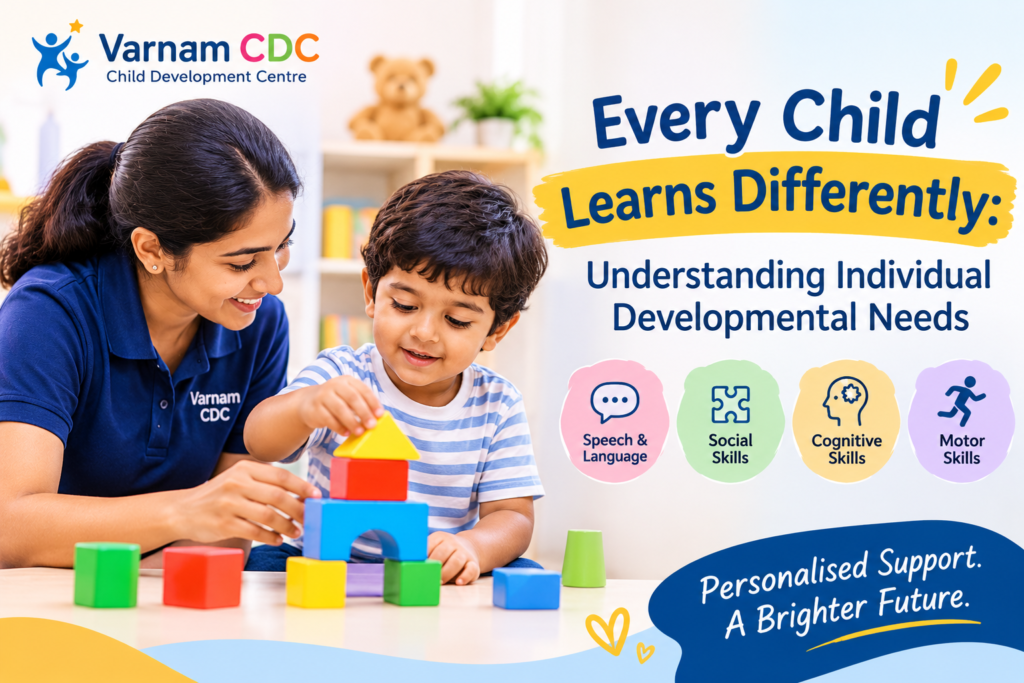
Every child is unique. Some children start speaking at an early age, while others take a little longer to express themselves. Some enjoy learning through books and activities, while others understand things better through play, observation, and hands-on experiences with the best child development centers in India. These differences are a natural part of childhood development.
However, parents sometimes worry when their child does not learn or reach milestones at the same pace as other children. Comparing children can create unnecessary pressure and may affect a child’s confidence. Instead, understanding individual developmental needs and providing the right support can help every child grow at their own pace.
Recognising that every child learns differently is the first step towards creating a positive and supportive learning environment.
Understanding Individual Learning Differences
Children develop different abilities at different stages. Their learning patterns may depend on several factors, including their environment, experiences, interests, communication abilities, and developmental needs.
Some children may learn new words quickly but need additional support with social interaction. Others may have strong problem-solving abilities but find it difficult to concentrate on classroom activities.
Learning differences may include:
- Difficulty understanding or following instructions.
- Delayed speech and communication skills.
- Challenges with reading, writing, or basic learning activities.
- Difficulty maintaining attention and concentration.
- Sensory sensitivities to sounds, lights, or textures.
- Challenges with social interaction and emotional regulation.
- Different learning speeds and problem-solving approaches.
These differences do not mean that a child cannot learn or succeed. They simply indicate that some children may benefit from different teaching methods, additional encouragement, or professional support.
Why Comparing Children Can Be Harmful
One common mistake parents make is comparing their child’s development with siblings, classmates, or children of the same age.
Statements such as “Why is your child not speaking like other children?” or “Other children can do this easily” may seem harmless, but they can create stress for both parents and children.
Every child has individual strengths, interests, and learning abilities. Constant comparisons can affect self-confidence and make learning feel like a competition.
Instead of focusing on what a child cannot do, parents should recognise their achievements, encourage their interests, and celebrate small improvements. A child’s progress should be measured against their own developmental journey rather than someone else’s milestones.
The Importance of Personalised Developmental Support
Personalised support means understanding a child’s individual strengths and challenges before deciding how to support their learning and development.
A professional assessment can help identify areas where a child may need additional guidance. Based on the assessment, specialists can recommend suitable developmental activities, therapies, and learning strategies.
For example, a child experiencing communication difficulties may benefit from speech therapy, while a child struggling with sensory processing or everyday activities may need occupational therapy.
Choosing a professional child development center can help parents access developmental assessments, specialised therapies, and personalised intervention plans.
A good developmental support programme focuses on the child’s abilities, encourages participation, and creates opportunities to develop essential skills at a comfortable pace.
Inclusive Education: Creating Opportunities for Every Child
Inclusive education is about providing equal learning opportunities for children with different abilities and developmental needs.
Every child deserves to feel accepted, respected, and supported in their learning environment. Schools and educational institutions can encourage inclusion by adapting teaching methods, offering individual attention, and creating activities that allow children to participate according to their abilities.
Teachers and parents should work together to understand a child’s learning requirements. Visual learning materials, interactive activities, practical demonstrations, and additional learning time can make education more accessible.
An inclusive environment not only supports children with developmental differences but also teaches other children important values such as kindness, patience, acceptance, and respect.
How Parents Can Support Individual Development
Parents play a significant role in helping children discover their abilities. Simple everyday activities can create valuable learning opportunities.
Here are a few practical ways to support your child’s development:
- Spend quality time talking, reading, and playing together.
- Encourage children to explore activities based on their interests.
- Give simple instructions and allow enough time to respond.
- Appreciate small achievements and positive efforts.
- Avoid comparing their abilities with other children.
- Maintain regular communication with teachers and therapists.
- Seek professional guidance if developmental concerns continue.
Parents looking for reliable support can explore a recognised child development center in India that provides individual assessments, evidence-based therapies, and family-focused developmental programmes.
Every Child Deserves the Opportunity to Grow
Child development is not a competition, and there is no single learning method that works for every child. Some children need additional time, while others benefit from specialised guidance and personalised learning strategies.
The goal should always be to understand each child’s abilities, identify their needs, and provide the right opportunities for growth.
With patient parenting, inclusive education, and appropriate professional support, children can gradually build confidence, communication, independence, and essential life skills.