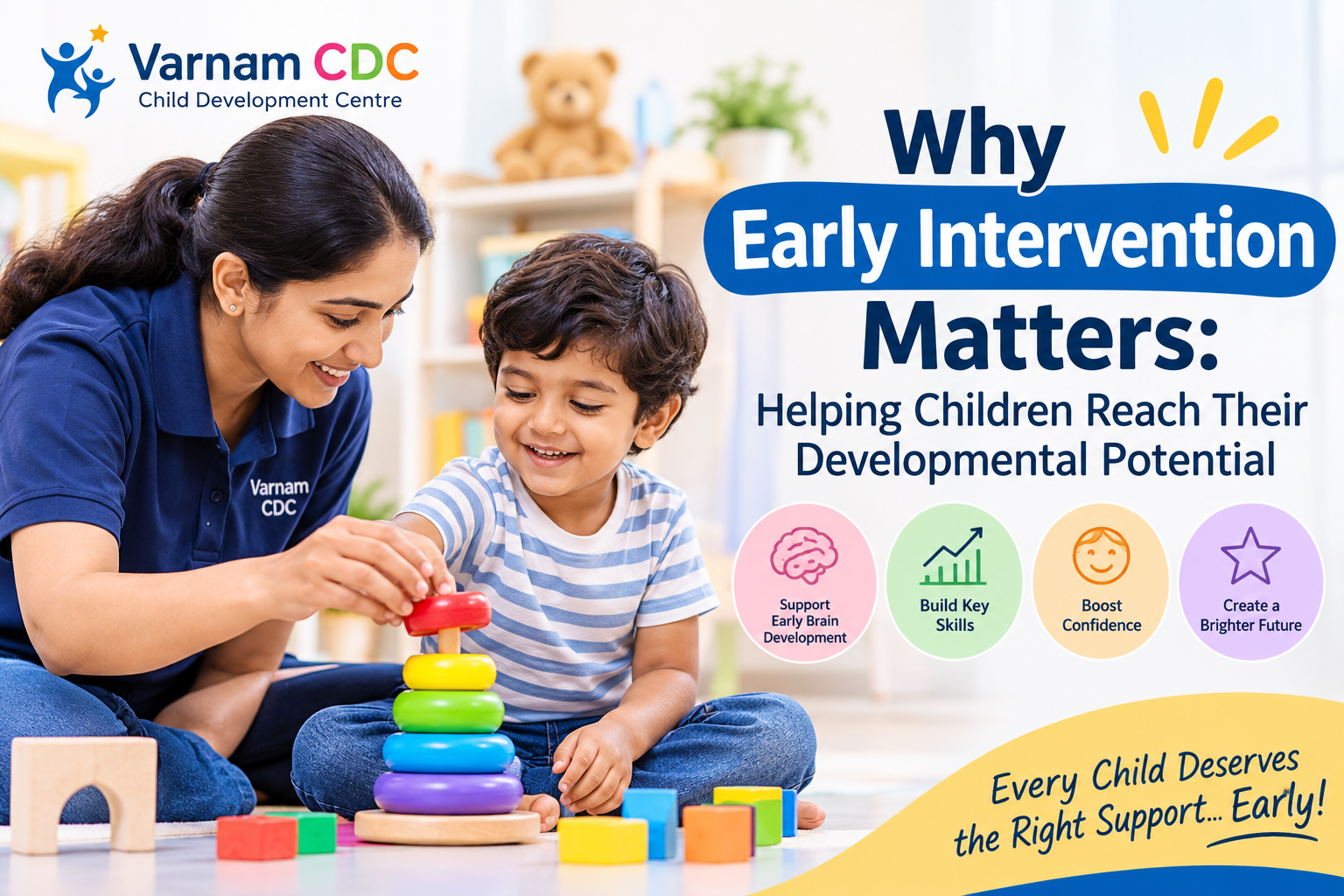
Every child grows and develops at their own pace. From saying their first words to taking their first steps, every milestone is an important part of childhood. However, some children may take more time to develop certain skills, such as speaking, walking, understanding instructions, interacting with others, or managing their emotions. While every child is different, recognising developmental delays at an early stage can make a significant difference in their future.
Early intervention plays an important role in helping children overcome developmental challenges, build essential life skills, and reach their full potential. With the right guidance, professional support, and family involvement, children can make meaningful progress in their development.
Understanding the Importance of Early Identification
Early identification means recognising possible developmental delays or differences during the early stages of childhood. Parents are often the first to notice changes in their child’s behaviour, communication, movement, or social interaction.
Some common signs that may need attention include:
- Delayed speech or difficulty expressing needs.
- Limited eye contact or social interaction.
- Difficulty understanding simple instructions.
- Challenges with walking, balancing, or motor skills.
- Repetitive behaviours or unusual play patterns.
- Difficulty responding to their name.
- Challenges with attention, learning, or emotional regulation.
These signs do not automatically indicate a developmental disorder. However, they should not be ignored. Seeking professional advice at the right time helps parents understand their child’s needs and explore suitable support options.
Why Developmental Assessment Is Important
A developmental assessment helps professionals understand how a child is progressing across different areas of development, including communication, physical abilities, social skills, behaviour, and cognitive development.
A proper assessment provides valuable insights into a child’s strengths and areas where additional support may be required. It also helps identify whether a child needs speech therapy, occupational therapy, behavioural support, physiotherapy, or other specialised interventions.
Consulting a qualified developmental pediatrician can help parents understand their child’s developmental concerns and receive appropriate medical guidance.
Rather than comparing children with others, developmental assessments focus on understanding each child’s individual abilities and requirements.
How Timely Intervention Makes a Difference
The early years of childhood are an important period for brain development and learning. During this time, children develop communication, movement, social interaction, and problem-solving skills.
Early intervention provides structured support during these important developmental years. Depending on the child’s needs, intervention may include:
- Speech Therapy: Helps children improve communication, language understanding, and speech development.
- Occupational Therapy: Supports sensory processing, fine motor skills, daily activities, and independence.
- Behavioural Therapy: Helps children develop positive behaviours, social skills, and emotional regulation.
- Developmental Support: Encourages learning, cognitive development, play skills, and interaction with others.
- Parent Training: Guides parents on practical ways to support their child’s development at home.
Choosing a professional early intervention center can help families access appropriate assessments, personalised therapy plans, and continuous developmental support under professional guidance.
The Role of Parents in Early Intervention
Parents play one of the most important roles in a child’s developmental journey. Therapy sessions are valuable, but learning should also continue at home through everyday activities.
Simple activities such as reading picture books, talking during mealtimes, playing interactive games, singing songs, and encouraging independent activities can support a child’s development.
Parents should also maintain regular communication with therapists, follow recommended home activities, and track their child’s progress. Most importantly, children need patience, encouragement, and a supportive environment rather than pressure or comparisons.
Understanding that every small improvement matters can make the journey more positive for the entire family.
Choosing the Right Developmental Support in Hyderabad
Finding the right professional support is an important step for parents who have developmental concerns about their children. Look for a centre that offers individual assessments, qualified professionals, personalised intervention plans, regular progress monitoring, and active parent involvement.
A collaborative approach involving parents, therapists, and developmental specialists helps ensure that children receive consistent support based on their individual needs.
Every Small Step Builds a Brighter Future
Early intervention is not about putting labels on children or expecting immediate results. It is about understanding their needs, identifying challenges early, and providing the right opportunities to grow.
With early identification, proper developmental assessment, timely intervention, and strong parental support, children can build confidence, improve essential skills, and become more independent.